The Cost of Compressed Air Leakage
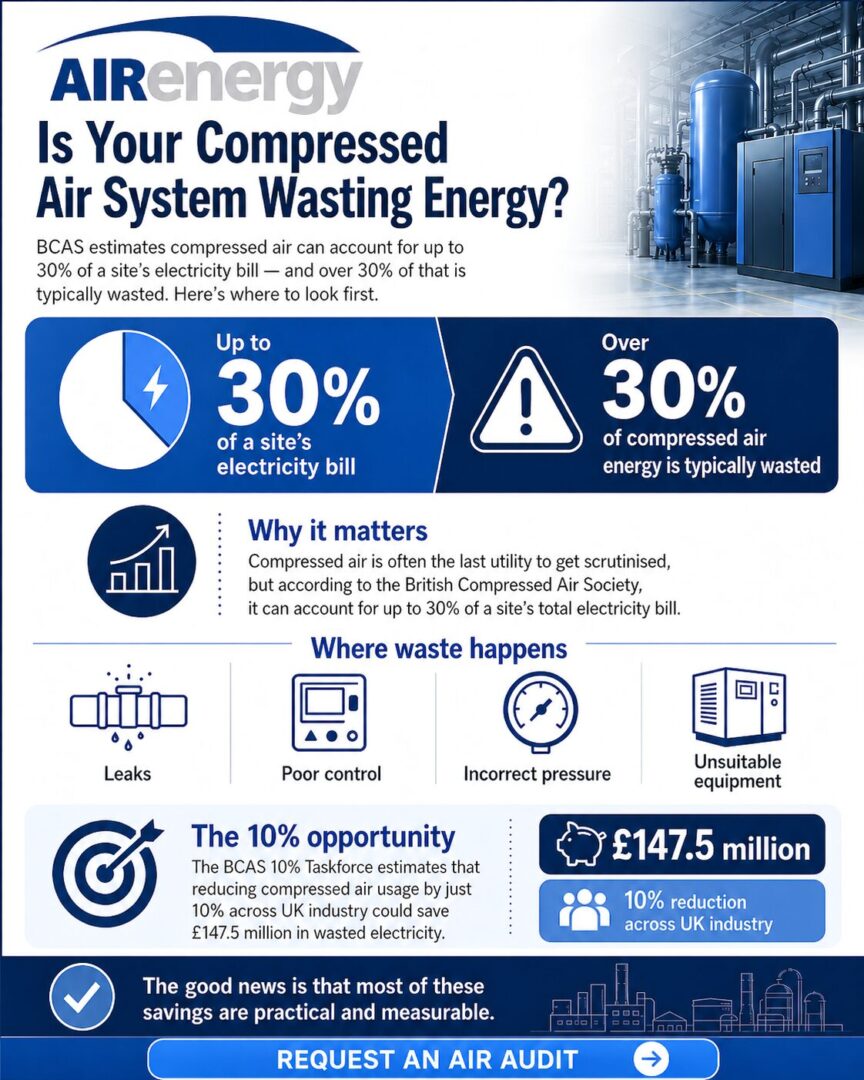
Compressed air typically accounts for around 10% of an industrial site’s total energy consumption and in some facilities significantly more. Where leakage is unmanaged, it can represent 20–30% of compressed air production, creating substantial and ongoing energy waste, directly increasing operating cost. It is about quantifying loss, understanding system behaviour and identifying where corrective action will deliver measurable return.
Compressed air leaks can be caused by:
– Corrosion on older piping or hoses
– Wear and tear on, or damage to joints, O-rings, seals, couplings, flanges etc
– Poorly applied sealants
– Leaks in poorly maintained air tools
– Human error – valves being left open or equipment not turned off after use
How compressed air leaks affect your business’s bottom line:
- With any loss in pressure caused by a leak, your equipment becomes less efficient, requiring more fuel because it needs to work harder to produce the optimum output.
- Leaks can result in fluctuating pressure levels which can affect tools and disrupt production.
- The need to work harder puts equipment under greater strain, increasing the wear and tear and making it more likely that parts will need repairing or replacing.
- The more maintenance and repairs needed, the greater the costs.
- As maintenance and repairs require downtime, they will increase the costs of leaks to your business still further.
In order to prevent waste, the Carbon Trust recommends that businesses schedule regular air leak detection surveys – possibly every three months. Any leaks discovered need to be repaired as quickly as possible in order to optimise production efficiency.
Our leak detection process
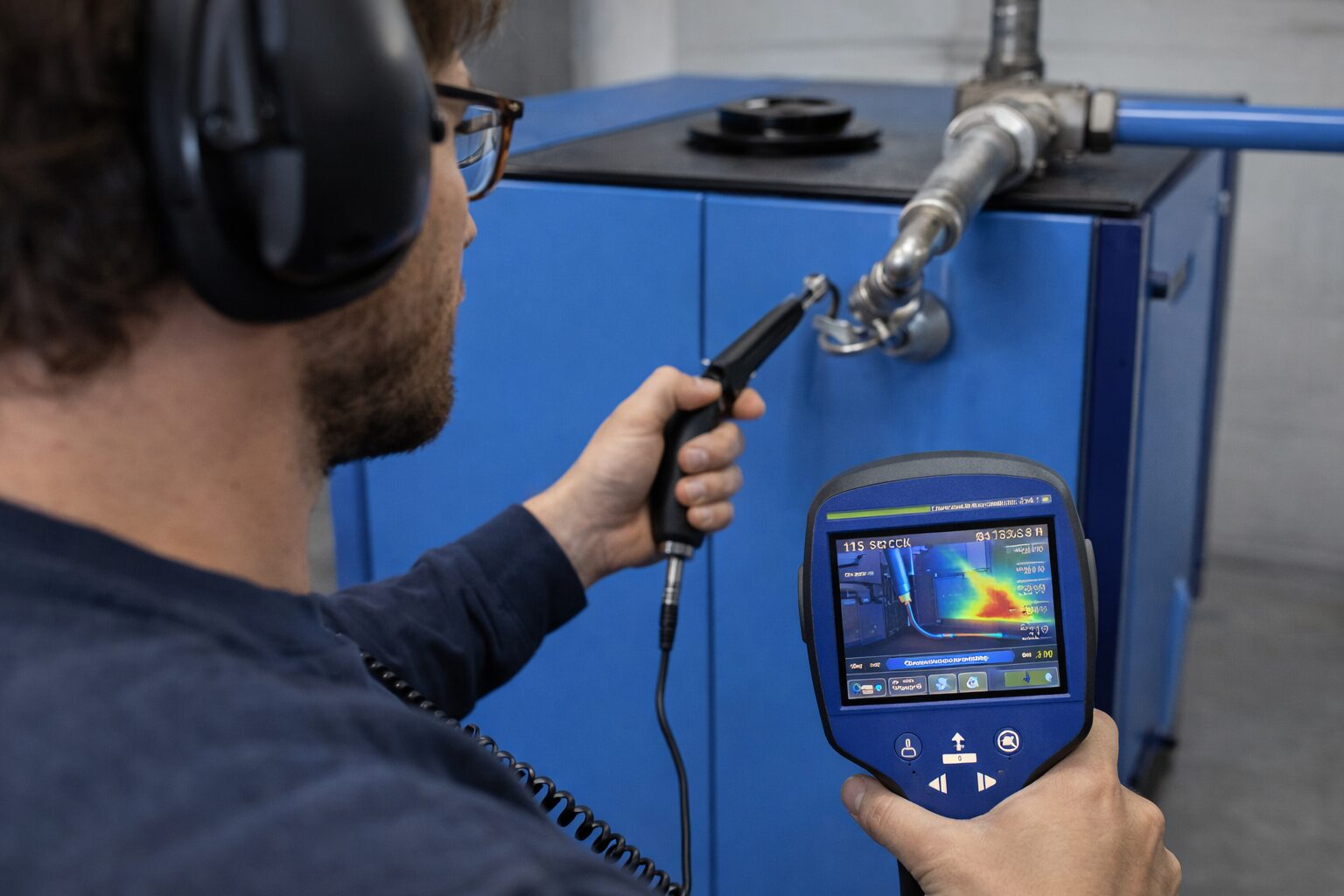
Our leak detection specialists use ultrasonic air leak detectors to detect even the smallest of leaks from up to 15 metres away. This means we can easily check pipes that are normally inaccessible.
The survey will look for different types of leak: loose connections and couplings, degraded seals, and valves which have been left open.
How the detector works
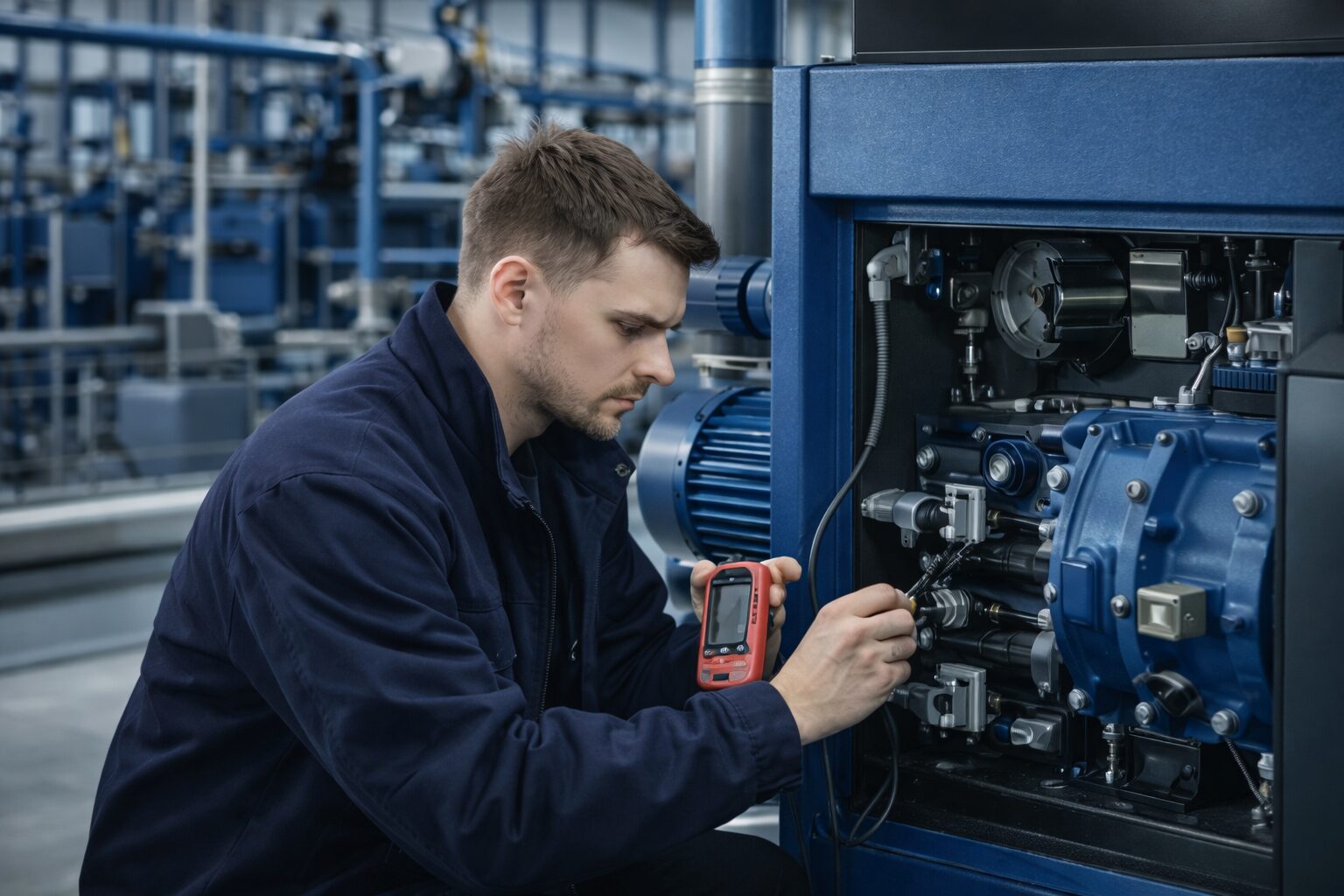
Our engineers assess compressed air systems as working environments, not isolated machines.
That means looking at: how air is generated, controlled and distributed, where energy is being lost, how reliability and efficiency can be improved together. The outcome is a clear, practical view of where waste exists and what is worth fixing first.
Why compressed air waste is usually hidden
Compressed air leaks often go unnoticed because background plant noise masks audible leak sounds.
Ultrasonic detection identifies high-frequency sound signatures generated by escaping air, allowing leaks to be located accurately – including in elevated pipework, enclosed spaces and hard-to-access areas — without disrupting operations.
Survey findings are logged, quantified and prioritised, providing a clear basis for targeted corrective action.
When leak detection is not enough
Compressed air leakage can be costly. Therefore rather than wait for a leak to become large enough for your staff to detect and report, prevent it from happening in the first place by booking regular audits which will detect even the smallest leak, giving you plenty of time to fix it before it becomes disruptive.