
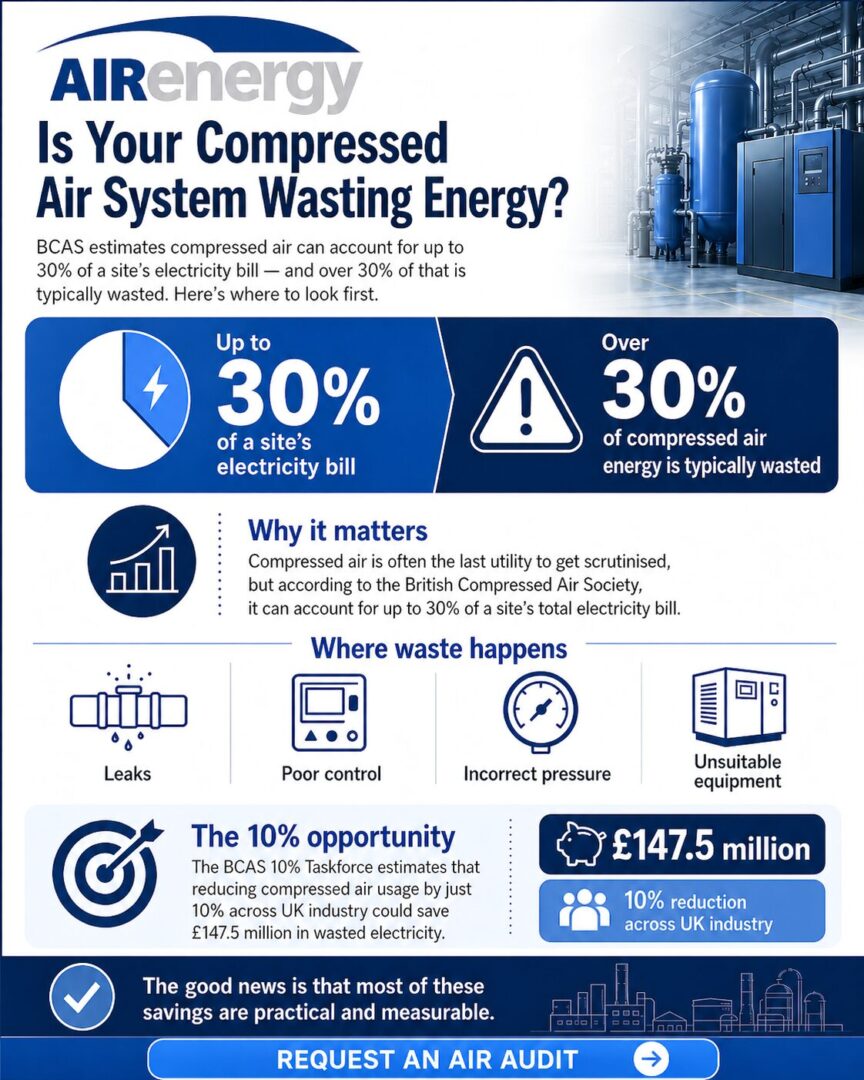
The good news is that most of these savings are practical and measurable.
BCAS case studies show what’s achievable. A carpet manufacturer spent just over £3,000 on leak repairs and saved an estimated £36,785 annually. A crisp manufacturer introduced central control across seven compressors and cut predicted running costs by 45%. A construction materials company installed heat recovery from its compressors and recouped the project cost within a year.
The pattern across all of them is the same: the waste was already there, it just hadn’t been measured.
The good news is that most of these savings are practical and measurable.
BCAS case studies show what’s achievable. A carpet manufacturer spent just over £3,000 on leak repairs and saved an estimated £36,785 annually. A crisp manufacturer introduced central control across seven compressors and cut predicted running costs by 45%. A construction materials company installed heat recovery from its compressors and recouped the project cost within a year.
We’ve seen the same on sites we work with. At Rotable Repairs, an ageing and insufficient compressed air and nitrogen system was redesigned from the ground up – improving process control, increasing capacity and reducing energy consumption.
At Makevale, a containerised compressor solution avoided more than £10,000 in structural installation costs. At BBC Studios Elstree, a properly specified compact system solved an application that had no off-the-shelf answer.
The pattern across all of them is the same: the waste was already there, it just hadn’t been measured.
If your compressed air system hasn’t been reviewed recently, that’s usually where the opportunity is.
The starting point in every case was understanding what the system was actually doing – not what it was assumed to be doing.
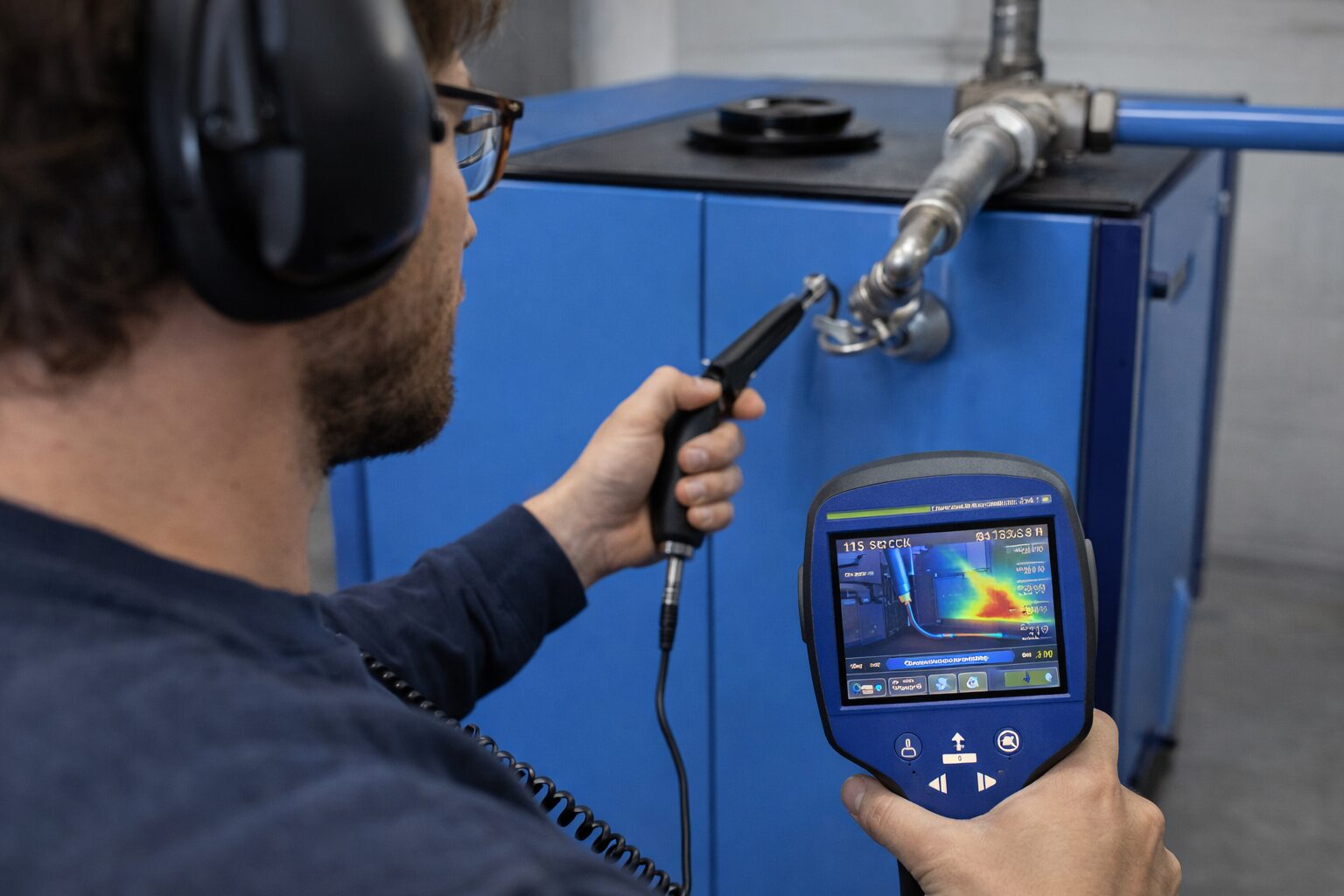
Talk to one of our engineers about a compressed air audit or leak detection survey




Practical guidance on reliability, efficiency and compliance for compressed air, vacuum and nitrogen systems.

Enter your details below to save your shopping cart for later.