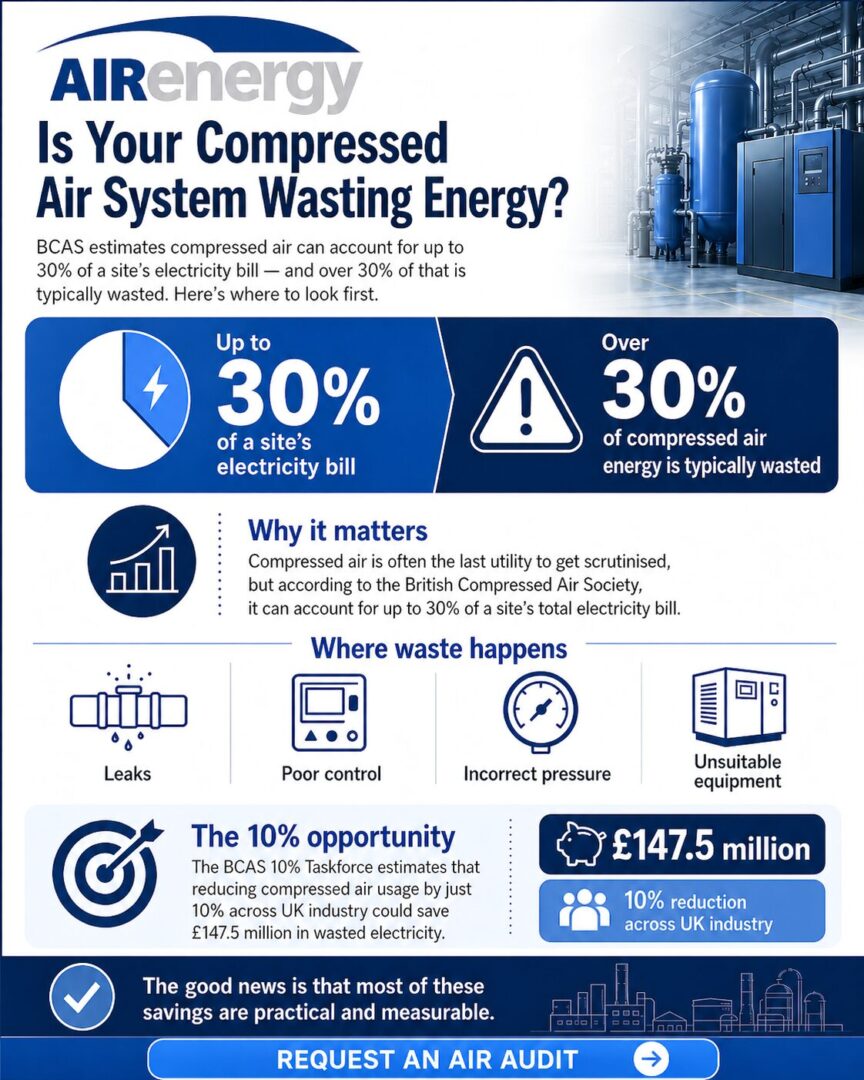
Why this matters in 2026
Energy prices remain volatile. Equipment is ageing. Margins are under pressure. Yet compressed air systems are often left untouched because:
– It still works
– We don’t have time to review it
– We’re not sure where the waste actually is
Your first Industrial Resolution is about changing that, using evidence, not assumptions. A system can appear to work fine while:
- consuming more energy than necessary
- running compressors harder than required
- masking leaks with higher pressure
- accelerating wear across the system
- and because the waste is distributed, it often goes unnoticed
What taking control looks like
Stopping air waste doesn’t mean ripping out equipment or committing to major capital spend. It starts with understanding:
- actual air demand vs installed capacity
- pressure settings and control strategy
- load profiles, part-load inefficiencies and leaks
- risks that could lead to unplanned downtime
From there, targeted improvements can be made, often delivering measurable savings with minimal disruption.
Air Energy supports industries where reliability, safety and performance are critical – from manufacturing and process environments to specialist and regulated sectors. Our team can scale support as customer requirements evolve, without compromising service quality.
How Air Energy helps
Our engineers assess compressed air systems as working environments, not isolated machines.
That means looking at: how air is generated, controlled and distributed, where energy is being lost, how reliability and efficiency can be improved together. The outcome is a clear, practical view of where waste exists and what is worth fixing first.
Why compressed air waste is usually hidden
A compressed air audit is not about finding fault. It’s about understanding how the system actually behaves. A structured review typically examines:
- demand patterns across shifts and processes
- pressure settings and control response
- compressor loading and sequencing
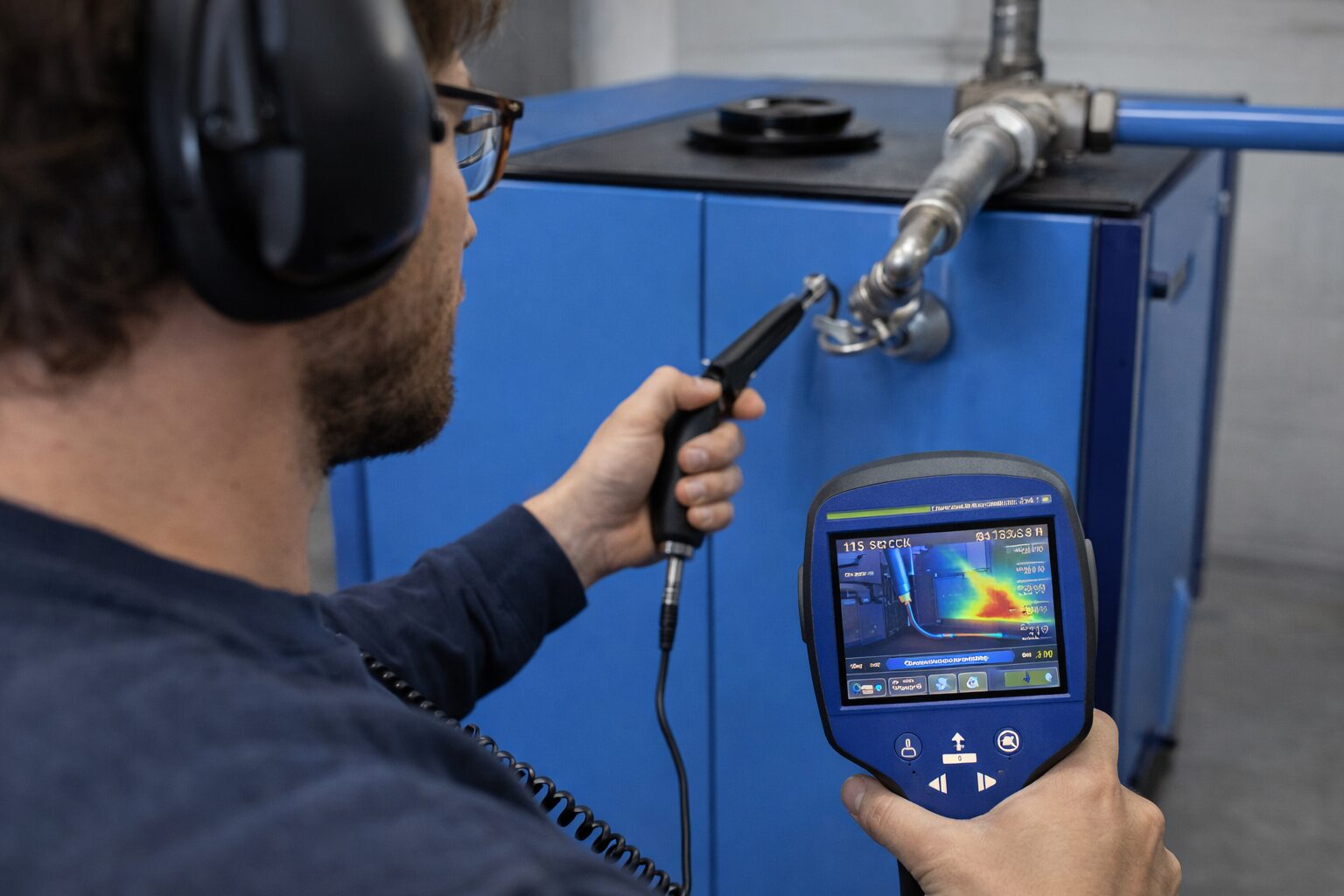
- distribution losses and leakage rates
What often surprises teams is how much energy is lost supporting demand that isn’t required. Compressed air systems rarely fail loudly. They fail quietly, through inefficiency.
The value for your business is that air audits highlight risks before failures occur, reduce unnecessary stress on equipment, and support better planning of service and upgrades. Crucially, they replace assumptions with data – making decisions easier to justify internally → speak to an expert about an air audit today
Read about our independent Air Leak Detection Survey → Air Leak Detection Survey | Air Energy