10 Best Practice Tips for Energy-Efficient Compressor Installations
We have created a comprehensive energy savings guide to help you reduce your running costs and your carbon footprint by making your air compressors more energy efficient.
Why Should You Download This Guide?
Find out more about:
- Reducing compressor unloaded running hours
- Decreasing pressure bands for enhanced efficiency
- Conducting compressed air audits to identify efficiency improvements
- Eliminating air leaks to minimise energy waste
- Harnessing heat recovery for energy efficiency
- The benefits of modern compressed air equipment
- Installing the correct compressor size and technology
- Emphasising regular maintenance’s impact
Overview of the Guide
Our 10 best practice tips will enhance the energy efficiency of your air compressors so you can avoid energy wastage and high electricity bills.
1. Reducing Unloaded Running Hours
Compressed air makes up a significant portion of the total energy expenditures within the realm of industrial manufacturing, accounting for approximately 12% to 40%. This indicates the importance of compressed air energy conservation, as it wields considerable influence over the cumulative energy outlay and CO2 emissions of your facility. Within this context, compressor controllers present intuitive and user-friendly mechanisms to effectively reduce unloaded running hours.
2. Eliminating Air Leaks
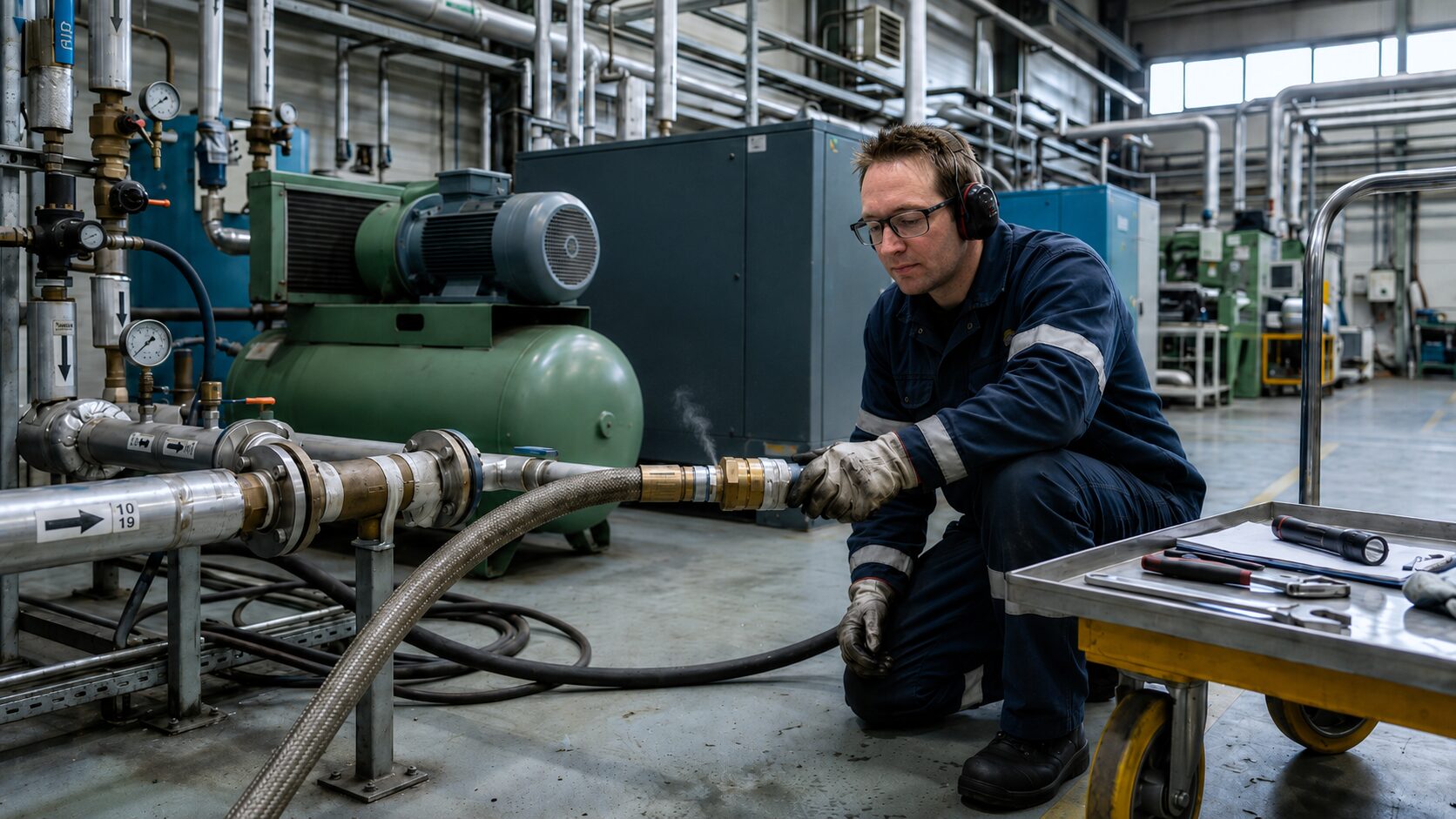
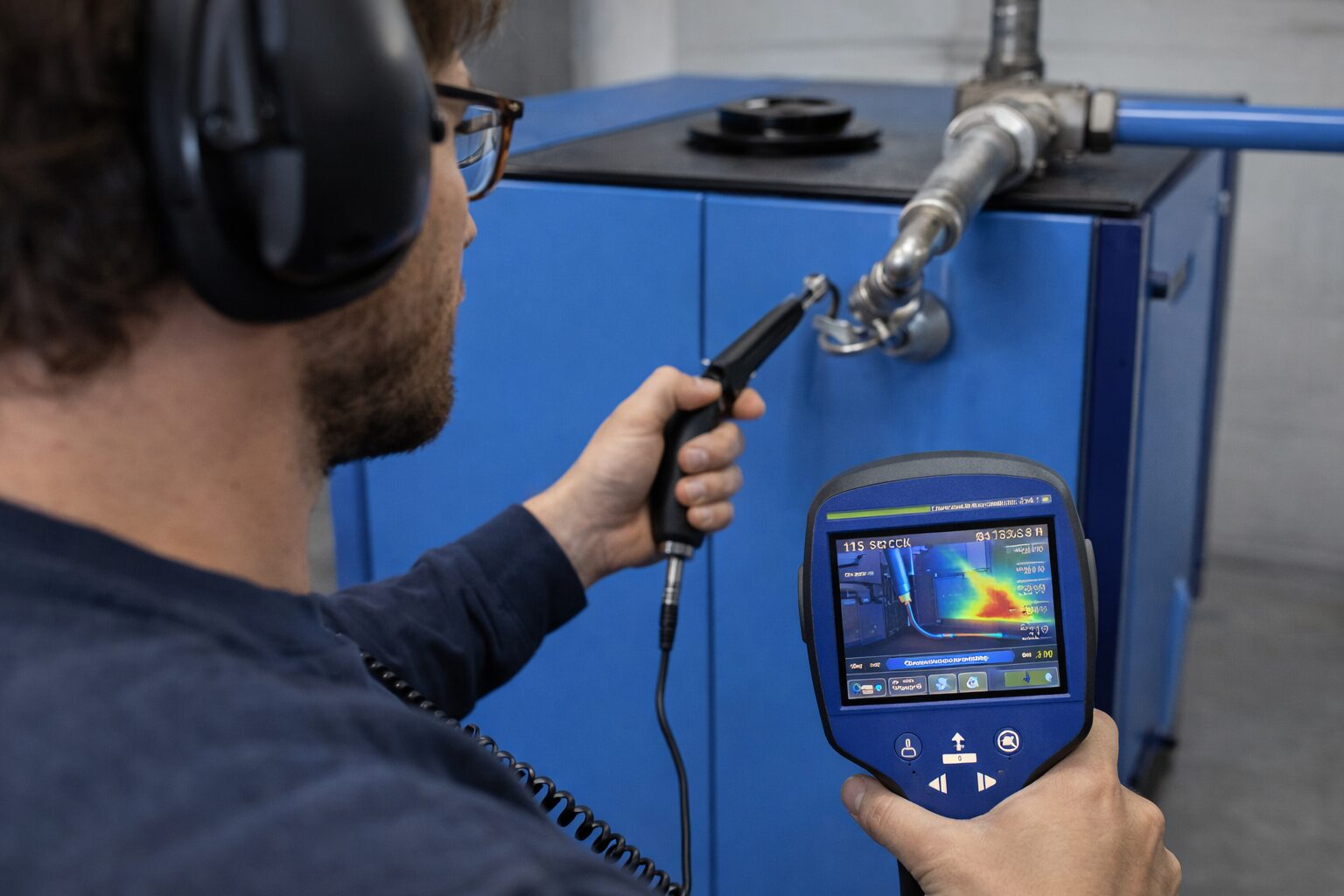
Leakages stand as a substantial contributor to energy inefficiency, particularly in aged compressed air systems. Even a minute 3mm leakage point can lead to an approximate weekly loss of £980 in wasted energy. Research suggests that leakages could account for up to 20% of the overall compressed air consumption. One effective approach involves running the air compressor without production to detect potential leaks. Rectifying these air leaks promptly will yield immediate cost savings.
3. Reducing Pressure Bands
An established principle for most compressors dictates that a reduction of 1 bar in pressure (14.5 psi) can result in a notable 7% decrease in electricity consumption. To achieve this, careful adjustment of the compressor’s pressure settings is recommended, ensuring the attainment of the lowest pressure while reducing the pressure band without compromising operational functions.
4. Harnessing Heat Recovery
Heat recovery presents a significant opportunity for manufacturers to achieve notable savings by harnessing the waste heat generated by air compressors. Notably, an estimated 90% of industrial air compressors employed in the UK possess the potential for heat recovery integration. Leveraging recovered heat from compressed air reduces the need for additional energy expenditures, such as heating hot water or utilising exhausted cooling air for space heating.
5. Ensuring Correct Compressor Size
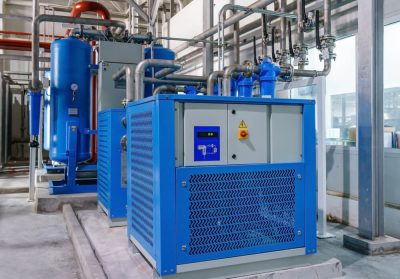
Selecting the right size air compressor is crucial to the smooth operation of your facility. When determining the most suitable compressor type, a series of critical considerations should be made, including the intended application and scope, the volumetric airflow requirements, the minimum operational pressure prerequisites of your facility, the need for clean and dry air (involving the use of dryers and filters) and more. Given that a substantial 70% of a compressor’s Total Lifecycle Cost (LCC) is attributed to energy consumption, this strategic selection process will ultimately result in reduced operational expenditures for your factory.
Want to know more? Download our guide HERE for more detailed energy-saving tips.
Energy Savings for Your Air Compressors
Compressed air is one of the most important utilities for industry manufacturing. And at the same time, it’s one of the largest consumers of energy. As a result, compressor energy savings will have a great impact on your overall business costs and on the environment. You can look forward to lower operational costs, enhanced efficiency and a reduced carbon footprint.
Check out our comprehensive guide (insert guide link) for insights into how you can implement energy-efficient practices for your air compressors.